




Tattoo Aging
One of the biggest misconceptions about tattoos is the belief that they will look the same today, ten years from now, and for the rest of your life. They won't. Just as your skin changes with age, so does the tattoo that lives within it. This is not a flaw of the tattoo or the ink, but simply a natural process that cannot be completely avoided.
Many factors influence how quickly a tattoo ages. Prolonged exposure to UV radiation, working in environments with high temperatures, dust or chemicals, frequent swimming in the sea or chlorinated pools, and lifestyle in general can all accelerate the aging process. Genetics also play an important role. No two people have the same skin, and not all skin ages at the same rate.
A fair-skinned person living in a colder climate, where the tattooed area is covered by clothing for most of the year, will generally retain a fresher-looking tattoo for much longer than someone with darker skin who spends most of the year exposed to strong sunlight.
The Role of Ink Colors
The choice of colors plays a significant role in a tattoo's longevity.
On fair skin, virtually all colors remain clearly visible, while on darker skin the situation is somewhat different. If the natural pigmentation of the skin is darker than the tattoo pigment itself, lighter colors will gradually blend with the skin tone and become far less noticeable over time.
This is especially true for white and yellow ink. It is not uncommon for white ink on darker skin to develop a yellowish, bone-like or ochre tint after repeated sun exposure and tanning. Once this happens, the change is permanent and cannot be reversed. For this reason, large areas of white or very light colors are generally not recommended for people with darker skin tones.
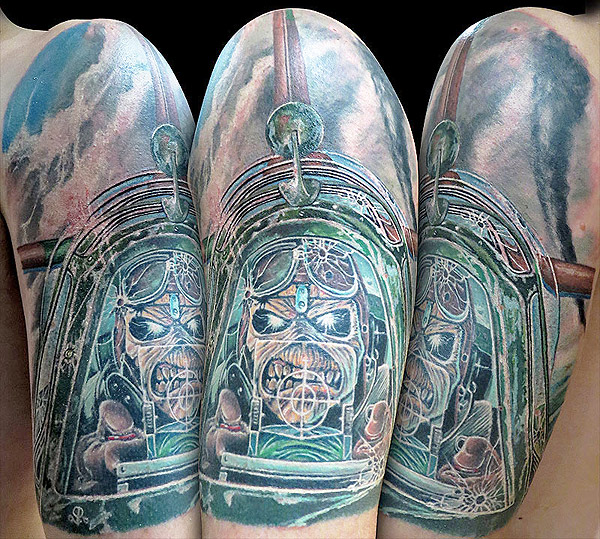
- fresh tattoo -


- same tattoo after two years -
In terms of longevity, tattoo pigments can roughly be ranked as follows:
- Black
- Red
- Cool colors (blue, green and purple)
- Dark magenta and similar red shades
- Orange and other warm colors
- Yellow
- White
Black ink is by far the most durable. Even after decades, it remains the foundation that keeps the overall design readable and recognizable.
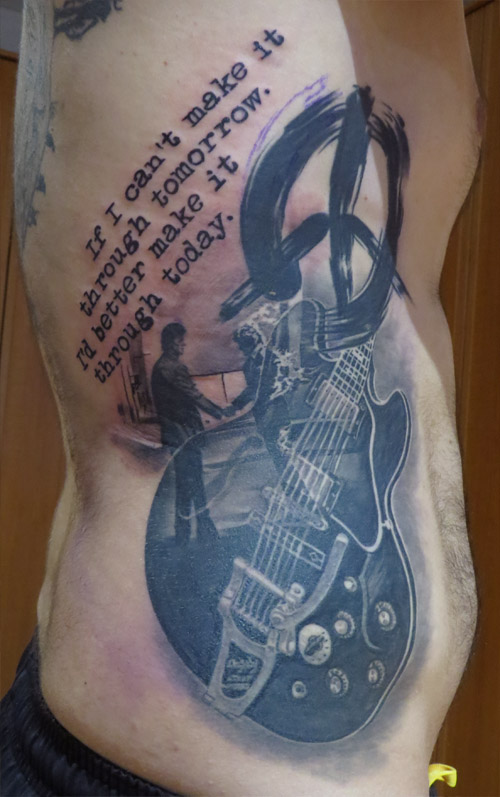
- fresh tattoo -
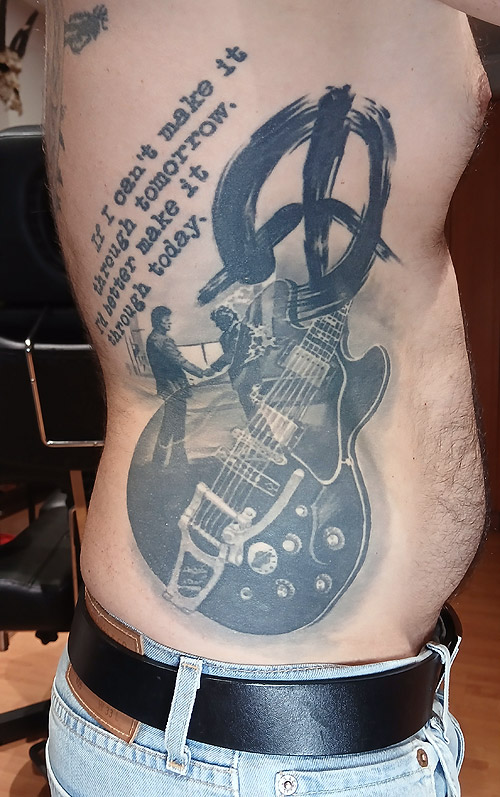
- same tattoo after six years -
Tattooing Technique
The longevity of a tattoo depends not only on the ink but also on the quality of the tattooing technique.
Contrary to popular belief, tattooing is first and foremost a craft. Only after the technical aspects have been mastered—proper needle depth, consistent line work, smooth shading, and a thorough understanding of the skin as a medium—does genuine artistic expression become possible. Without strong craftsmanship, there can be no lasting art.
The problem is that most tattoos you see online are photographed immediately after they are finished. The colors are vibrant, the contrast is strong, the lines are razor-sharp, and everything looks spectacular. However, the true quality of a tattoo can only be judged after five, ten, twenty or even thirty years.
That is when it becomes clear whether the design was well planned and properly executed. Some tattoos remain crisp and readable for decades, while others blur to the point where the original design is barely recognizable. As time passes, most colors gradually fade, while black ink continues to hold the composition together.

- tattoo after five years -
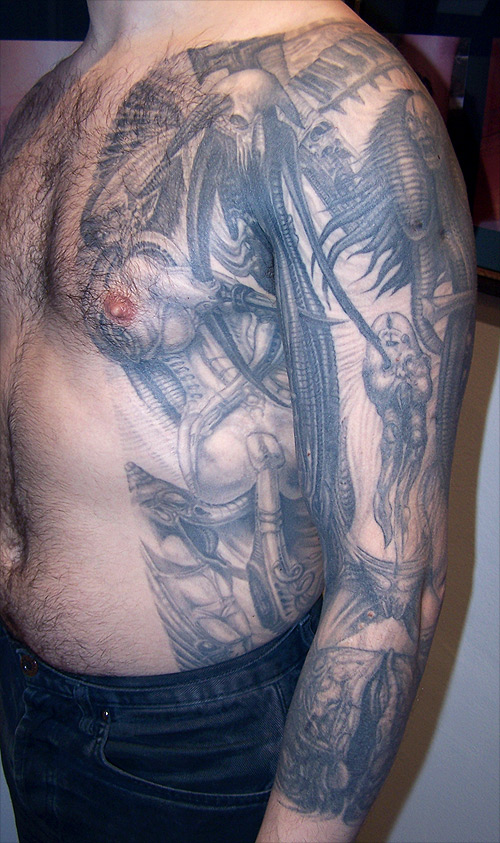
- same tattoo after fifteen years -
Small Designs with Too Much Details
One of the most common mistakes that accelerates tattoo aging is choosing a design that is too small while containing too many fine details.
Over the years, tattoo pigment naturally spreads slightly beneath the skin. As a result, tiny details gradually merge together, eventually becoming an indistinct mass. What looked stunning on the day it was done may lose much of its definition after ten or fifteen years.
This is especially true for today's popular fine line and micro tattoos. Extremely thin lines are the first to lose their sharpness. They gradually widen, soften and become less defined. In some cases, the tattoo already appears noticeably different once it has fully healed.
The same applies to tattoos on the palms, soles of the feet and the sides of the fingers. Due to constant friction, rapid skin renewal and heavy mechanical stress, these are among the least suitable areas for long-lasting tattoos. They tend to fade and distort much faster than tattoos on other parts of the body. This is not a matter of poor workmanship, but simply the nature of the skin in those areas.

- tattoo after one year -

- same tattoo after ten years -
Proper Aftercare
Even the highest quality tattoo cannot reach its full potential without proper aftercare during the healing process.
Failing to follow your tattoo artist's instructions may result in poor healing, pigment loss or scarring. In more serious cases, an infection may develop and require medical treatment. When that happens, the appearance of the tattoo becomes secondary because your health should always come first.
Changes in Body Weight
Significant fluctuations in body weight can also alter the appearance of a tattoo.
Gaining or losing twenty, thirty or more kilograms can stretch or shrink the skin enough to noticeably affect the tattoo. Lines may become distorted, proportions may change, and the overall appearance may be altered. The greater the change in body weight, the greater the likelihood that the tattoo will change as well.
Conclusion
A tattoo is not a photograph printed on paper. It lives within your skin and ages together with your body.
A tattoo's longevity is influenced by genetics, lifestyle, ink color selection, the quality of the tattooing, the size and design of the artwork, proper aftercare during the healing process, and many other interconnected factors discussed in this article.
A well-executed tattoo will never remain exactly the same throughout life, but even after many years it should preserve what matters most: clarity, recognizability and aesthetic value.